#04
As a humanoid research platform
We started our robotics business in 1999, with the design and fabrication of H6, a bipedal robot for performing experimental research commissioned by the University of Tokyo. We followed up with HIRO, an upper torso humanoid robot developed in-house and announced in 2001, and the HRP series, a bipedal walking robot developed as part of a national project and offered beginning in 2002, and are currently working with NEXTAGE OPEN for research and development.
We were one of the first companies to commercialize open source middleware (ROS) for robots before it became widely available, and have continued to provide such software as it has evolved for more than 15 years. The latest ROS version is used throughout the world for a variety of R&D applications.
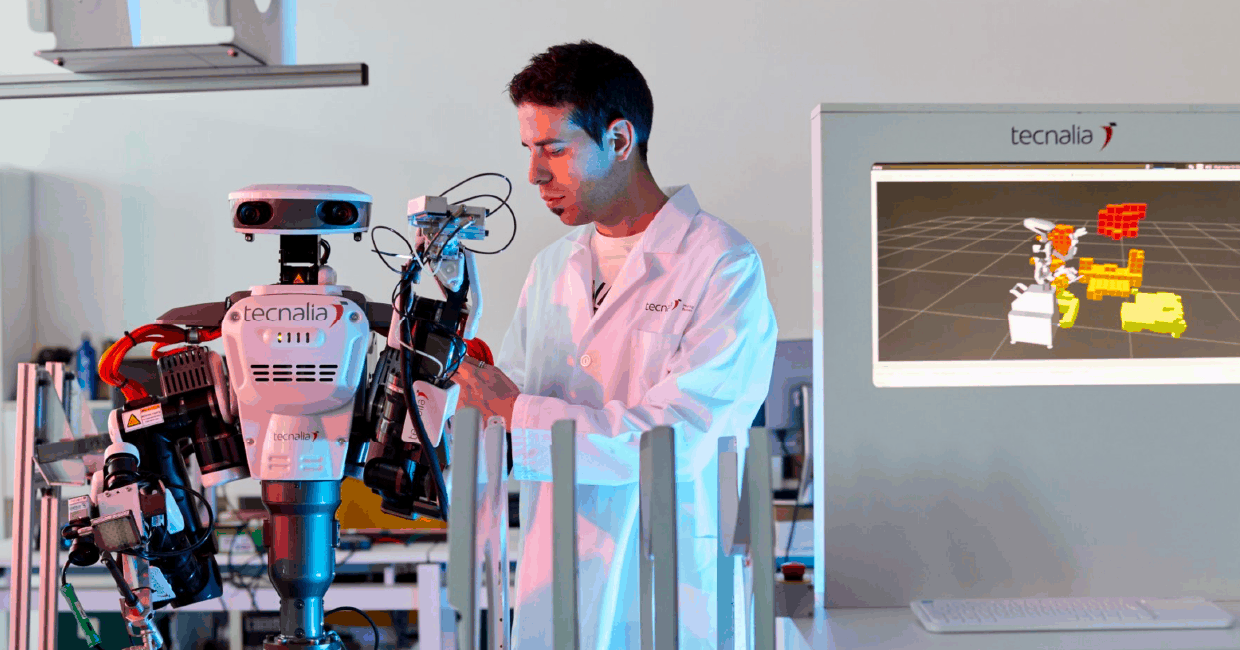
Tecnalia, a private, non-profit research institution in the Basque Country, Spain, serves as a center of collaborative research between industry and academia in the region. The research center is developing advanced robotic solutions to automate demanding operations in industrial environments, as well as developing new concepts around cable-driven robots, flexible and versatile robots, and collaborative robots. The collaboration targets companies that wish to achieve innovation through robotics, such as integrating robot technology into their products or using autonomous industrial robots in their manufacturing processes. NEXTAGE OPEN is being used in robotics research to provide robots with autonomy and versatility of use, and to bring a high degree of flexibility to factories.
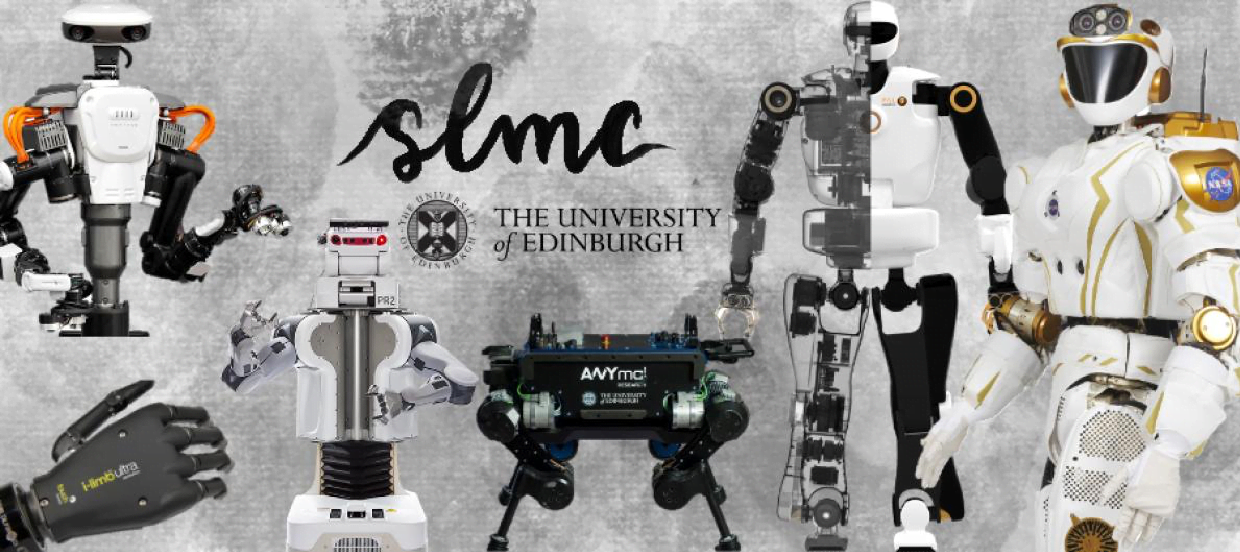
Humans excel at complex, adaptive tasks, quickly adjusting to changes in their bodies and their environment. The SLMC Group at the University of Edinburgh aims to create a versatile and robust robot with similar capabilities. Using NEXTAGE OPEN to study all aspects of robot motion synthesis, their main research interests include learning algorithms for optimal planning and control in anthropomorphic robot systems with large degrees of freedom. They incorporate techniques from the fields of probabilistic inference and learning, stochastic optimal control, reinforcement and apprenticeship learning, and large-scale optimization to address real-time problems.